
Reviewed by: Demeatraus Minter, LCDC, NCC
At the beginning of the year, many people have new year resolutions or goals that they aim to complete before the year runs out. Often, these goals have to deal with health, personality, career, and so on. What do most of these resolutions have in common? Breaking habits.
We all have a habit that we fall into as a response to something else. Sometimes these habits can be good for us and our well-being; other times, they can be harmful. Trying to break a habit is one of the most challenging tasks. Our minds and bodies are so used to performing that task that it becomes second nature to us. What do we mean by second nature? That habit has become so powerful because it is easy for us to do, or we do it without putting too much thought into it. So, when it comes to stopping, it can feel foreign and difficult. Thankfully, the art of breaking a habit has been studied. Truthfully, the process is not easy, and depending on the habit, it might take more time than you intended, but it’s important to follow through.
The Need For Reward
Rewards; this is how our mind works. Most of the time, we learn or pick habits up based on the reward we get. In general, the reward is a feeling triggered; we want always to feel that way, so we continue to practice that task or behavior. The need for a reward drives us to pick up a habit, so what about self-control?
Practicing self-control to break a habit isn’t the best method. We want to repeat that behavior because we want that reward. So, if you’re trying to practice self-control, you have to consider that the need for the reward is still there. You can always find a different way to meet that reward or fall into the temptation of repeating the habit you want to break. This is why the self-control method for breaking a habit doesn’t always work. So, what does work, and how do you eventually break your habit?
Steps To Breaking A Habit
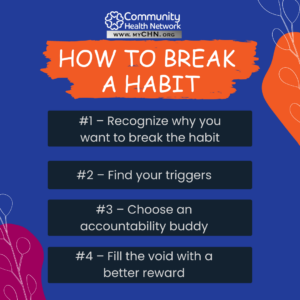
It’s important first to recognize why you want to break this habit. Is the habit causing harm to you or those around you? Would it benefit you more if you broke this habit and picked up another one? Once you’ve recognized why you want or need to break your habit, you’ve put yourself in the mindset to actually follow through.
The next step you need to take is finding your triggers. What is a trigger? An event or action that stimulates an emotional reaction. Every habit, no matter how small, has something that prompts and triggers it. Here’s what you can do to track your triggers. Note and look for the following patterns:
- Where does the habit happen
- What time/s of the day does it happen
- Is there anything involved in the process (ex. people, objects, etc.)
- What do you feel like when it happens
Once you’ve recognized and acknowledged these triggers, it’s time to find support. No one wants to go through a hard situation alone, and the same goes for breaking a habit. Having support or someone to keep you accountable for your actions helps build support to break the habit. Confide in a friend, partner, therapist, or family member who can keep you accountable. Let them know your triggers, and ask them to check up on you periodically to ensure you’re not giving in to temptation.
This next step is only useful for some habits. If your habit involves certain foods, alcohol, or cigarettes, then avoiding situations where you might be around those things is another step. This might not be easy at first, but your accountability partner can help you avoid those tempting situations.
Last but not least, find a new habit to fill the void of your reward. As we mentioned earlier, we function on the need for a reward. So, as you work towards breaking your habit, pick up a new one that’s good and fulfills that same reward feeling. If you don’t want to pick up a new habit, then choose to give yourself a different reward once in a while. This is a great way to encourage yourself to keep going and recognize that you’re doing a great job.
Let’s Start the Journey Together
The journey of breaking a habit is very personal, but again you don’t have to do it alone. Keep in mind that once in a while, you might slip up. That is perfectly okay; we are all human and make mistakes. If this happens, it is important not to give up! Go back to acknowledging your mistake and starting the process again.
So, let’s go on the journey together, acknowledge your habit, find your triggers, choose an accountability partner, and reward yourself for the little milestones you pass. Also, remember that breaking your habit is a process and isn’t going to break in 1 day, 1 month, or in some cases, even 1 year. Take your time, stick to the plan, and before you know it, you’ll have that habit broken.