
Have you heard of the saying you are what you eat? This is a true saying. The foods that you put into your system help your body to run, and depending on what you eat, your energy and how you function daily are affected.
People usually use this phrase when they see someone else eating unhealthy and want them to change their diet. The truth is that everyone’s diet is a little different. Some of us need to eat more calories than others. Some can’t have certain foods because they are allergic. Everyone is different. Regardless of how you choose to eat, we all need the basics.
The vitamins and minerals we need for our bodies to function are the same all around. Vitamins like calcium, potassium, iron, manganese, and other vitamins are essential for our health. Let’s keep in mind that the amount we each need may differ, but we all need it.
Certain foods help us to get the vitamins and minerals we need. Sometimes we relate the conversation of food to eating healthily. We’re not going to tell you that you shouldn’t eat healthy because you should (remember, you are what you eat). But we will tell you that you should focus on eating certain foods daily. These foods guarantee you’ll get the vitamins and minerals your body needs to function. Just a side note: you may not need to compromise some of the foods you like. (Gasp :o)
Your Everyday Food Pyramid
Do you remember the food pyramid? It was the pyramid they taught us in elementary or middle school that showed us the kinds of food that we needed to eat. The bad thing about learning the food pyramid as a child is that you don’t have much control over what you eat, and you don’t think it’s important. Even now that we’re older, the pyramid is still a little confusing. The truth is we don’t select our food or eat with the pyramid in mind. We know the concept and keep it in mind once in a while.
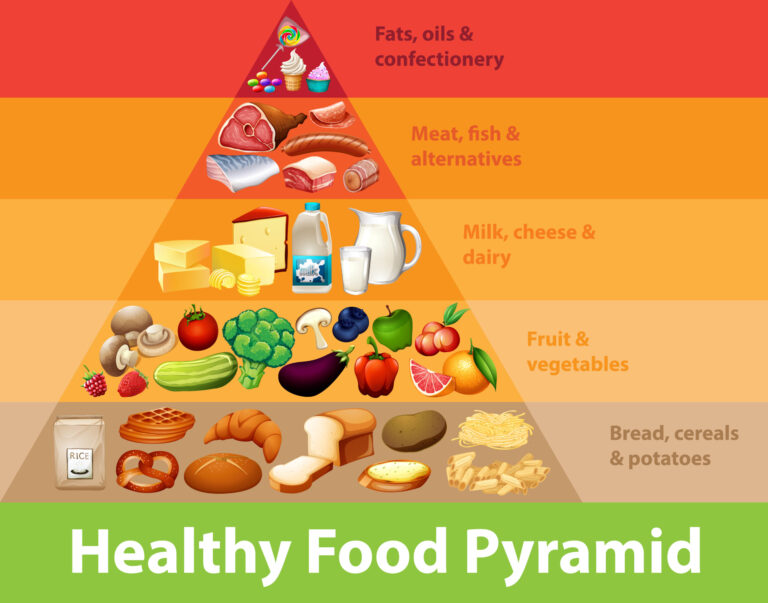
It seems like the government understood that this wasn’t the best way to teach us how to eat the foods we need. So, the food pyramid is now called MyPlate. This is a much more helpful visual tool because we use a plate to eat, and it allows us to use that as an example. So, let’s look at Your Plate.

According to the plate, we need to have a total of 5 food groups daily:
- Fruit
- Veggies
- Protein
- Grains
- Dairy
Now in each category, you need a certain amount of servings to fulfill your body’s basic needs. If you’re not sure how many food servings you need, you can always check the label. Servings for every food are always written on the nutrition label.
What happens is that sometimes we have more of a certain category and have little to none in the other food categories. This is mainly because of culture and the foods we’re exposed to daily. To avoid, not getting enough of each one, you can use the plate diagram as a guide and follow the required servings below:
2–4 servings (ex: 1 serving = 1 fruit the size of a tennis ball)
4–6 servings (ex: 1 serving = ½ cup of raw or cooked veggies)
2-3 servings (ex: 1 serving = 2-3 ounces of meat, fish, or poultry)
6-8 servings (ex: 1 serving = 1 slice of bread)
2-3 servings (ex: 1 serving= 1 cup of yogurt)
If you notice, the only thing missing from the servings guide is fats. No diet should eliminate fats because our body needs them as well. The only recommendation is that you have fats in moderation.
Plan Your Meal With MyPlate
When you plan your meal, keep MyPlate in mind. You should try to eat each food category every day. If you have any dietary restrictions, such as being vegan or vegetarian, you can get all the nutrients you need without eating traditional foods. Do your research and find recipes that help you meet your nutrition needs. Be what you eat and start eating with MyPlate.