
We hate to talk about it. We hate to admit we may need help with it. We even hate to say the word: STD. In the US alone, there are 2,554,908 cases of STDs reported with a large amount of those cases being Chlamydia. The number of cases is unsurprising: stigma and shame often prevent people from fully discussing their sexual health—even with health care professionals. Although it may be awkward to discuss sexual health, the month of September is dedicated to raising awareness and educating everyone on the importance of instilling good sexual practices. With good sexual practices and preventive care, sex can simply be sex without the fear of getting a disease or infection.
STDs vs. STIs: What’s the difference?
Recently, there has been some changes with the terms we use to discuss sexual practices. The newest term introduced in the field is STI which stands for Sexually Transmitted Infections. While many healthcare professionals sometimes use STI interchangeably with STD (Sexually Transmitted Disease), there are some differences. STIs are not diseases and can include bacteria, viruses, or parasites that are transmitted during sex such as pubic lice (American Sexual Health Association). STDs, on the other hand, are diseases that result from STIs and tend to be more serious—HPV being a good example since most cases go away but can sometimes lead to genital warts or cervical cancer and, at that point, would be considered an STD.
Importance of Sexual Health
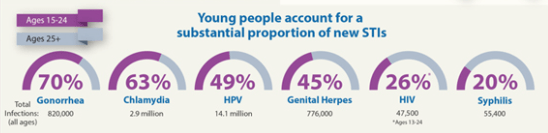
Figure provided by The University of Southern Mississippi
With the continuous rise of sexual health, we must begin to have conversations about sexual health without shame. Reportedly, in 2018, new STIs totaled $16 billon in medical costs attributed to common, preventable infections (CDC); moreover, young adults (Ages 15-24) tend to contribute the most to Gonorrhea and Chlamydia. Thus, it is important to maintain good sexual practices such as:
- Using Barrier Devices during Sex (Condoms and Dental Dams)
- Maintain good hygiene (Washing before and After sex, don’t reuse condoms, etc.)
- Get vaccinated against common STIs (Hep B and HPV)
- And, perhaps most important, Get STI test done!
The best sexual practices are often proactive in their approach. This can range from asking your partner their sexual history, purchasing condoms or dental dams before sex, and getting tested annually. It is important to get tested if there is ever any fear of having an STI after a sexual encounter. While it may be a little awkward, it is important to remember that STIs and STDs are common—there is no shame with it. Additionally, the longer one waits the more likely an STI is to develop into an STD raising the prices of treatment options.
Luckily, our providers at Community Health Network offer STD screening and treatment options for our community members. Our screenings are 100% confidential and include virtual visits and labs. Remember, being proactive about your sexual health is nothing to be ashamed of—if anything, people should be proud. If you would like to take your first steps in taking control of your sexual wellbeing, feel free to talk to your healthcare provider to see when you can schedule your next exam.
Resources and References:
https://www.cdc.gov/nchhstp/newsroom/docs/factsheets/std-trends-508.pdf
https://www.usm.edu/student-health-services/sexual_health.php