
There’s a trend going around that may or may not be beneficial to your oral health. If you’ve heard about mouth taping, then you know the trend I’m talking about. Sometimes, keeping your mouth shut while you sleep can be a little hard. After all, you’re not conscious of what’s happening, so your body is just there resting. Essentially, an open mouth during your sleep leads to snoring, drooling, bad breath, and a dry mouth.
This TikTok trend recommends mouth taping for those who have trouble keeping their mouth shut during sleeping. Supposedly, there are benefits to doing this, and it might be good overall for your oral health. Well, if you’re like most people, you may be skeptical about this trend, as you should be about any health advice you get on TikTok. So, we’re here to answer the most frequently asked questions about mouth taping and determine if this really has oral health benefits that you should take advantage of during your sleep.
What is
Mouth Taping?
Mouth taping is basically what it sounds like, putting skin-safe tape on your mouth in an attempt to keep the mouth closed. Essentially, this forces you to breathe through your nose instead of your mouth.
You’ll notice that this trend is mainly recommended for mouth breathers and snorers who are looking to change their habits. As we mentioned earlier, breathing with your mouth open during the day or night does come with consequences. Sore throat, dry mouth, bad breath, snoring, and less sleep for your partner are some of the most common “side effects.”
Are There Any Benefits?
So, what does mouth taping claim to do? The alleged benefits that come with mouth taping are plenty.
Because it promotes breathing through the nose, it is also recommended for those with allergies. The nose filters out allergens, which helps relieve someone with allergies. In addition, nose breathing adds some resistance that helps increase the volume of air your lungs can breathe in. Apart from this, here are some of the other benefits that come with mouth taping:

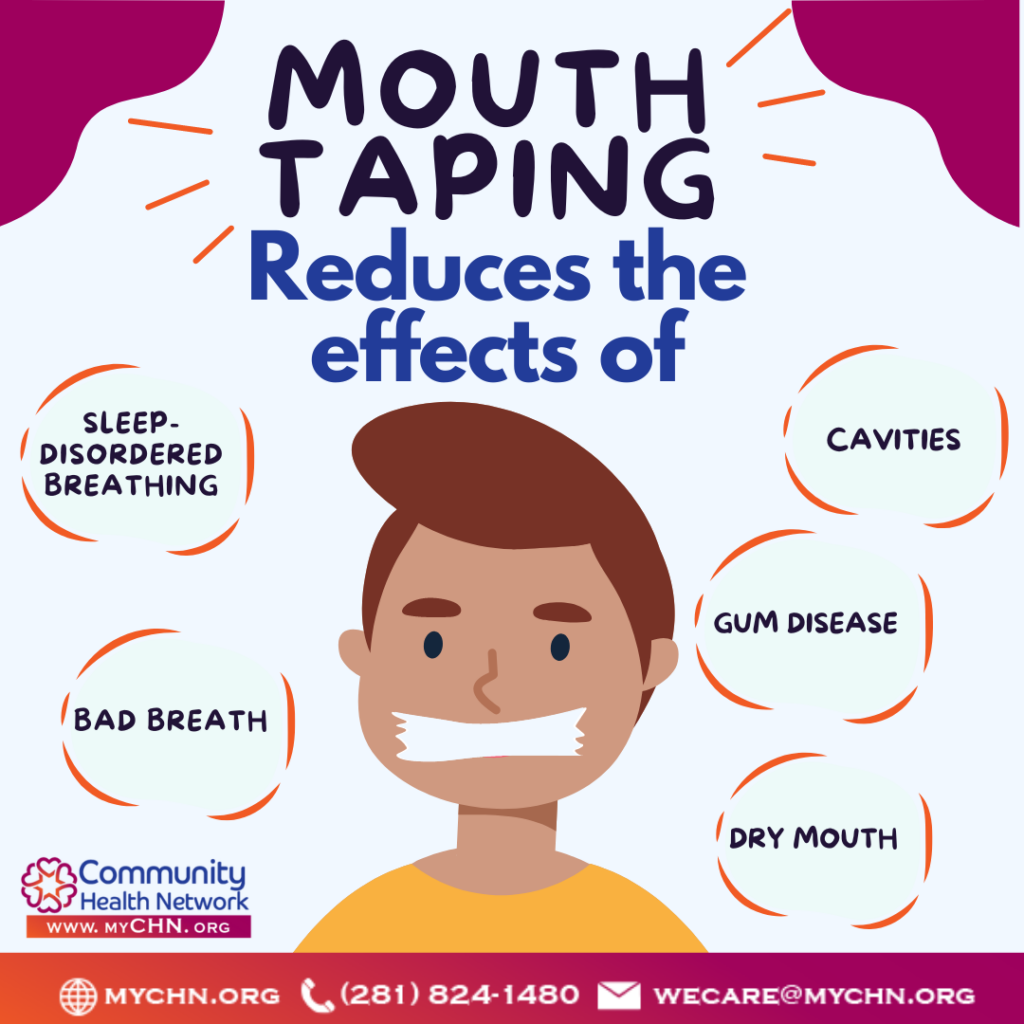
Answers to The Most FAQ
If mouth taping is something you’re considering, it’s essential that you have all the facts. So, let’s answer some of the most commonly asked questions about mouth taping.
Are there any side effects to mouth taping?
There are a few side effects to mouth taping, and these include: irritation around or on the lips, pain when removing the tape, disrupted sleep if difficult to breathe through the nose, anxiety, and discomfort.
What kind of tape should I use?
The kind of tape you use for mouth taping is important. You want to use porous tape that is safe for human skin. Duct tape, masking tape, or other tapes not in this category are not intended to be used on the body and may cause harm. You may try medically used adhesive tapes.
How do I apply the tape to my mouth?
There are no official guidelines for how-to-mouth tape. Most people put mouth-sized pieces of tape to cover both the top and bottom lip to keep them closed. Additionally, some people apply Vaseline or Chapstick to their lips to prevent a sticky mouth feeling.
Can I suffocate from mouth taping?
By taping your mouth shut, you impair your ability to breathe in deep full breaths, but the body is trained to wake you up if you’re unable to breathe. So, the basic answer is NO. If the wrong tape is used, this can be of harm and cause allergic reactions or rashes. Be advised and use the correct tape.
How long does it take for mouth taping to work?
The truth to this question is that it depends. Some people mention that it takes 4 to 6 weeks to see any results; for others, it doesn’t work. So, it depends on your body and how you take it.
How do I know if mouth taping is right for me?
It is always important to consult your doctor. They will be able to tell you whether this is a practice you should try. It is not recommended to mouth tape if you have any sleeping disorder or tend to throw up in the middle of the night because it can become a choking hazard.
What are some mouth taping alternatives?
There are various alternatives to mouth taping, but they all depend on the reason you’re trying out mouth taping in the first place. Some of the most common treatment alternatives for snoring include sleeping on your side and using nasal strips. To control allergies, try nasal strips or allergy medication.
Closing Advice
There seems to be a lot of evidence that proves the benefits of mouth taping. If this is something you, a friend, partner, or family member might benefit from, you can share this advice. Always remember that it is important to fact-check any health advice or information you get from TikTok. Additionally, always check in with your doctor and let them know of any health trends you’re considering. They can give you unbiased and specific advice based on your personal health needs.
If you’re trying out mouth taping, hopefully, it works out well, but remember there are other ways to better your oral health. Visit your dentist, let them check out your teeth and overall dental health, and let them lead the way.
Resources
Cleveland Clinic: Mouth Taping? Is It Safe?