
Maintaining good oral hygiene is essential for a healthy smile and your overall well-being. In addition to brushing your teeth, flossing plays a crucial role in removing food particles and plaque that can lead to gum disease and tooth decay. However, there are now a variety of flossing options, and it can be confusing to decide between traditional dental floss and the newer water flossing technology.
So, we are going to help you in your decision-making process. Keep reading to learn more about the pros and cons of each flossing method, and then hear our final advice on which you consider using.
Dental Floss: The Classic Choice
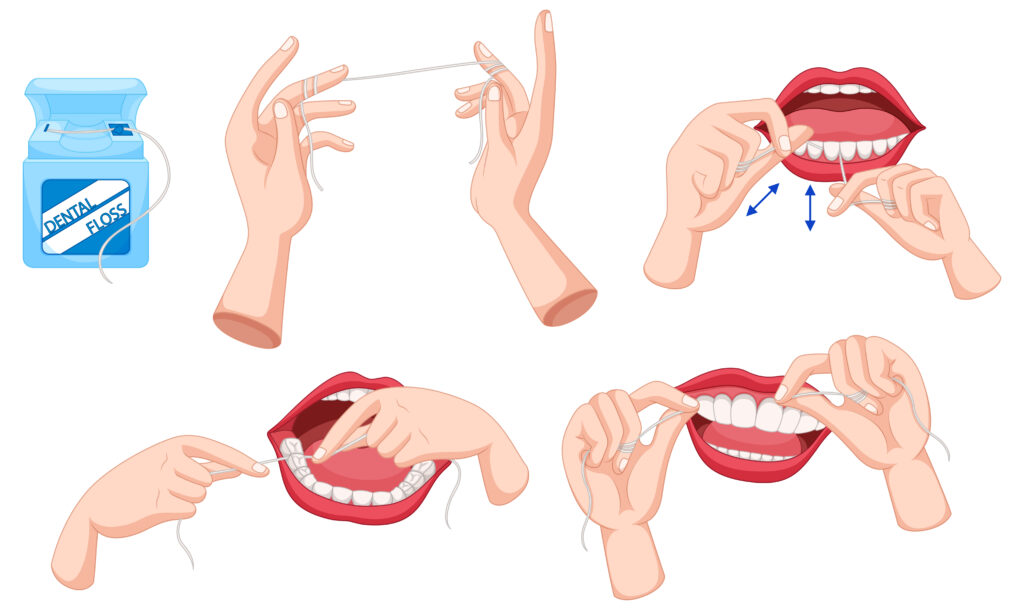
We all know the classic dental floss you get after your dentist appointment in a small tin filled with a roll of string. For many years, this has been the classic and only flossing method. In addition, it is available in various forms, like waxed, unwaxed, and flavored. Let’s check out the pros and cons of this classic choice.
PROS
- Detailed cleaning: It does a great job of reaching tight spaces between the teeth and under the gumline, effectively removing trapped food particles and plaque.
- Easy to carry: Dental floss is incredibly portable and can be taken anywhere, making it convenient for on-the-go oral hygiene. (a better replacement for toothpicks)
- Affordable: Dental floss is cost-effective and available at most stores, making it an economical choice for individuals and families.
CONS
- Technique Matters: Using dental floss correctly requires proper technique to avoid damaging gums or missing areas between teeth. Learning the proper method takes some practice.
- Discomfort: Some people, especially those with sensitive gums, find dental flossing uncomfortable. Incorrect flossing techniques can cause gum bleeding and discomfort.
- Time-Consuming: Flossing with dental floss can take a bit longer than its newer competitors, especially for those new to the technique.
Water Floss: The Modern Approach
Now let’s look at the new competitor, water floss. While we may consider it a newer option, it’s only new to the masses. Dentists have been using water floss on patients for years. This method includes a small, easy-to-handle tube and a small engine that pushes water from a storage unit through the tube and into your mouth.
PROS
- Gentle Cleaning: Water flossing uses a pressurized stream of water to clean between teeth and along the gumline. This is particularly gentle on gums, making it suitable for individuals with sensitivity issues.
- Easy to Use: Water flossers are user-friendly and require minimal technique. They can be especially helpful for people with hand mobility issues or those wearing braces.
- Efficient and Quick: Water flossing is generally quicker than traditional flossing and can clean areas that might be hard to reach with floss alone.
CONS
- Requires an initial investment: Water flossers typically come with a higher upfront cost compared to dental floss. However, they can be considered a long-term investment in your oral health.
- Messy: Using a water flosser can create some mess, with water splattering around the sink area. Regular cleaning is necessary to maintain hygiene.
- Not portability: While there are portable versions available, water flossers are less portable than a small container of dental floss. They are more suitable for use at home.

Choosing The Best Option For You
The choice between dental floss and water floss ultimately depends on your individual preferences, needs, and circumstances. If you value a time-tested, thorough cleaning method and are comfortable with proper flossing techniques, traditional dental floss might be the right choice for you.
On the other hand, if you have sensitive gums, difficulty using traditional floss, or simply prefer a more gentle approach, a water flosser could be your ideal solution. Water flossers are also a great option for individuals with braces or permanent retainers, as they can effectively clean around braces and wires.
Here’s our final thought. In an ideal scenario, combining both methods can provide comprehensive oral care. Using dental floss for precise cleaning and following up with a water flosser to rinse away any remaining particles can be an effective two-step routine. But of course, do what works and is best for you.
Remember, the most important aspect of oral hygiene is consistency! Whichever method you choose, make sure it’s added to your daily routine with regular brushing. And, of course, don’t forget to visit a MyCHN dentist for regular check-ups and professional cleanings. The battle between dental floss and water floss isn’t about one being definitively better than the other. It’s about finding the solution that aligns with your needs, preferences, and lifestyle. So, go ahead and make your choice – your smile will surely thank you!