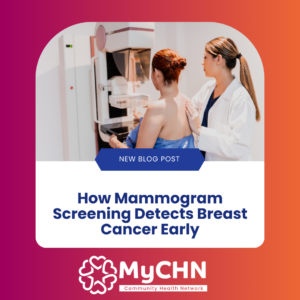
October marks the start of Breast Cancer Awareness Month. With 1 in 8 women diagnosed with breast cancer in her lifetime, breast cancer is a prevalent health crisis within the US. Unfortunately, there is no cure for breast cancer; however, early detection increases the chances of survival. Thus, regular visits and self-exams become increasingly important.
What is Breast Cancer?
Breast cancer is a form of cancer that is prevalent among women. Cancer is understood as “a broad term for a class of disease characterized by abnormal cells that grow and invade healthy cells in the body” (National Breast Cancer Foundation, INC). The abnormal growth can lead to tumors developing and, if left untreated, spread throughout the rest of the body. Breast cancer can begin in different parts of the breast, with the two most common forms of breast cancer being invasive ductal carcinoma and invasive lobular carcinoma (CDC). However, it is essential to note that “when breast cancer is detected early and is in the localized stage, the 5-year relative survival rate is 99%” (NBCF, INC). While the medical terms and statistics may be difficult to understand, everyone can take steps to check if any changes should be discussed with a medical professional.
Early Detection: What to look for?
Often, the symptoms of breast cancer are unnoticeable. However, people who have breast cancer tend to notice one or two symptoms. With the low visibility, there are some preventive measures one can take. Specifically, it is recommended women of all ages perform self-exams at least once a month to familiarize themselves with their breasts and alert medical professionals of any abnormalities. According to the National Breast Cancer Foundation, self-exams can be done.
With preventative measures, breast cancer can be managed and treated. It is important to do self-exams once a month to notice changes early on. Be sure to talk to a healthcare professional if abnormalities are found. For more information on how to perform a self-exam or for breast cancer overall, be sure to check out the resources below.
Resources and References:
Breast Self Exam (National Breast Cancer Foundation)
Breast Cancer Signs and Symptoms (National Breast Cancer Foundation)